
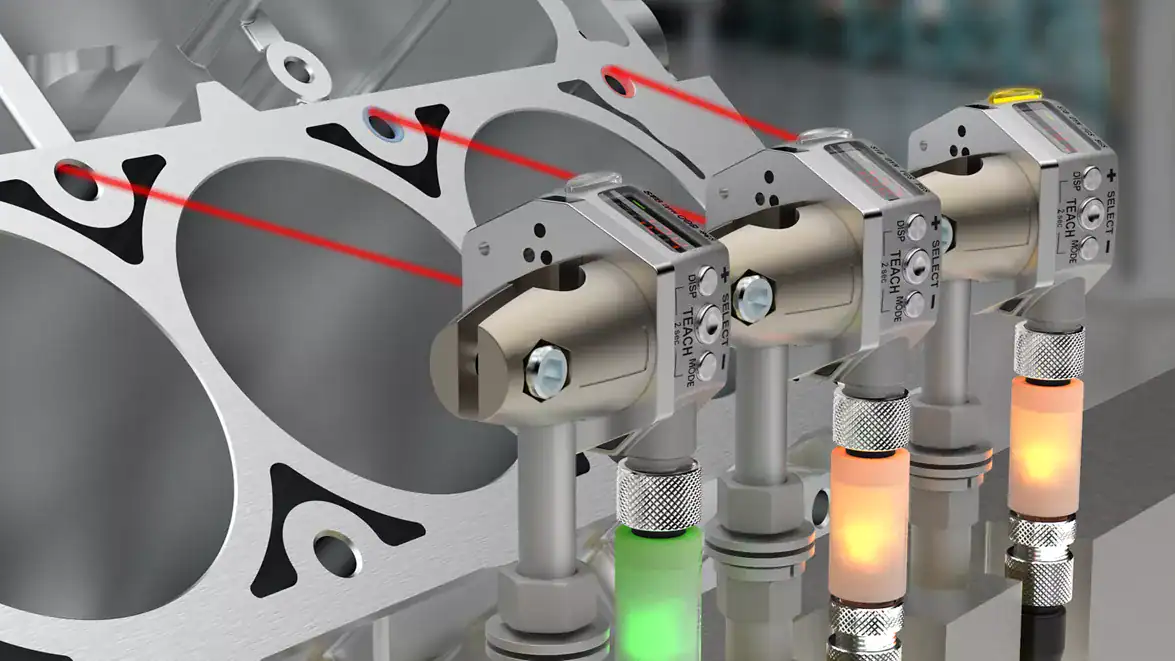
 The difference between PNP and NPN is the construction of the semiconducting material found inside the transistor. In a PNP transistor, the semiconducting material is made of three layers: a negative (N) layer between two positive (P) layers: Positive-Negative-Positive, or PNP. Likewise, an NPN transistor has a positive layer sandwiched between two negative layers: Negative-Positive-Negative, or NPN. Despite their different construction, both forms have positive and negative power leads and are connected to a device called the load, such as an attached indicator light, hub or IO-Link master, PLC, etc.
Similar Posts
Recommended Reading: What is 3D Time of Flight
This is an excerpt from a recent educational article by Banner: The initial operation of a 3D ToF sensor is fairly straightforward: light is emitted from the sensor, bounces off the target, and returns to a multipixel imager. The next part is a little more complex. As the light returns to the sensor, each individual…
Recommended Reading: Why Electric Actuators Are Better Than Pneumatic Actuators
This is an excerpt from a recent educational article by Orientalmotor: The biggest difference between pneumatic actuators and electric actuators is the source of power. Pneumatic actuators are powered by air, so there are many components in a pneumatic actuator system that are dedicated to the supply and maintenance of air. With electric actuators, these…
Recommended Reading: 3 Reasons Why Control Engineers are at Risk from PLCs and How to Mitigate
This is an excerpt from a recent educational article by Grace Technologies: Programmable Logic Controllers (PLCs) are the heart of manufacturing and production processes. PLCs offer flexibility, control, and efficiency, driving the operations of machinery and systems with precision. However, for control engineers and PLC programmers, working with these critical components does not come without…
What’s New In School for September 20, 2023
What’s New In School for September 20, 2023 To see all the recommended reading articles, click here. To see all the featured product spotlights, click here. To see all the What’s New In School updates, click here. Sincerely, Shawn Tierney, Instruction at The Automation School
Recommended Reading: IEEE 802.11 Roaming, Drop, And Reconnect Strategies
This is an excerpt from a recent educational article by Antaira: The demand for high-efficiency and uninterrupted wireless communication has grown exponentially in recent years. The advisements in the IEEE 802.11 wireless LAN technology have led to organizations becoming more dependent on wireless communications for daily activity that was once only available through wired LAN…